


 10°C

Warm, mineral-rich, soothing – thermal water and brine are often mentioned in the same breath. But are they actually the same thing? No. The terms describe different properties of water. However, water can be thermal water and brine at the same time.
This is particularly interesting for the Keidel Therme: Our water is natural thermal water from a depth of 850 metres, which comes to the surface at a spring temperature of 45 to 46 °C and is exceptionally rich in minerals.
In Germany, thermal water is groundwater that has a temperature of more than 20 °C at the point of exit. The term therefore primarily describes the natural temperature of the water.
Thermal water is formed deep below the earth’s surface. On its way through various rock layers, it can enrich itself with minerals and trace elements. Therefore, thermal water differs significantly in its composition depending on the source.
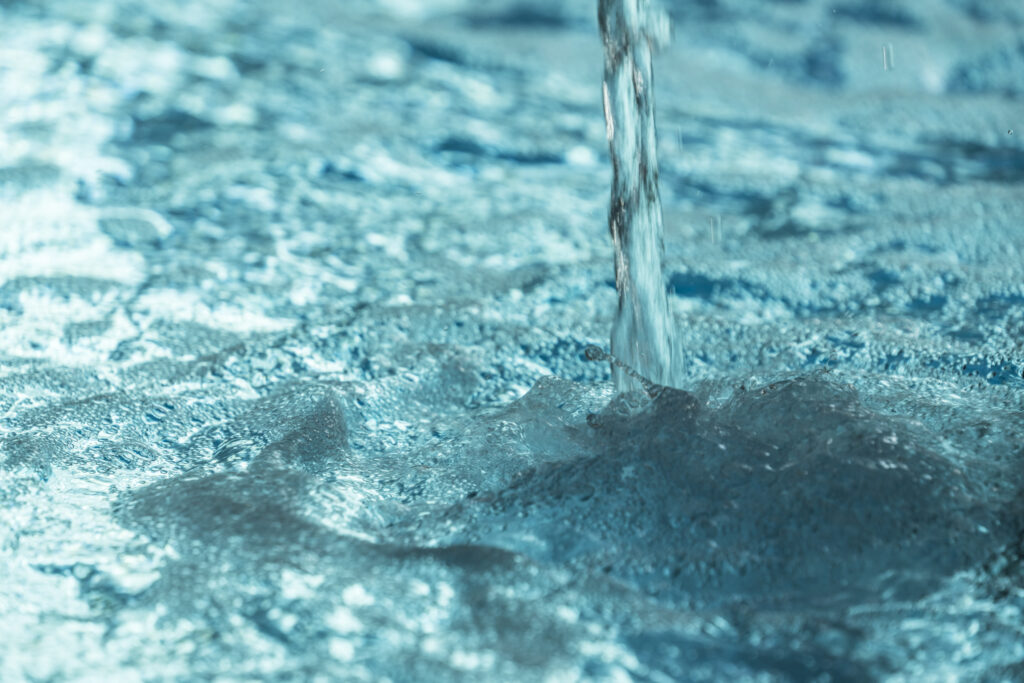
The thermal water of the Keidel Therme has a special path behind it:
The Kurt Sauer spring was developed in 1976. The water is pumped from a depth of around 850 metres and reaches the surface at a natural temperature of 45 to 46 °C.
The main spring supplies up to 120,000 m³ of thermal water annually – the equivalent of around 120 million litres.
This means that the Keidel Therme uses water that originates deep under Freiburg and is already naturally warm.
Another special feature of the Keidel thermal water is its high mineral content.
By comparison, Freiburg’s drinking water has a water hardness of about 8 to 12 °dH . The thermal water of the Keidel Therme, on the other hand, reaches 128 °dH.
This means that the water hardness of our thermal water is more than ten times as high as that of Freiburg’s drinking water.
The high hardness of the water is an indication of the large amount of dissolved minerals, especially calcium and magnesium compounds. The exact composition of a thermal water always depends on the rock layers and the geological conditions of the respective spring.
This does not automatically turn thermal water into brine. This is exactly where an important difference lies.
Brine basically refers to a particularly salty water solution. Depending on the definition, minimum concentrations of dissolved salts are used for this purpose; the German Geothermal Association states at least 14 g of dissolved substances per kilogram of water.
The crucial difference is therefore:
Thermal water is defined by its temperature, brine by its high salt content.
A water can therefore:
If a water is naturally warm and at the same time has a correspondingly high salt content, it can be described as thermal brine. The term “thermal brine” thus describes the combination of heat and high salt concentration.
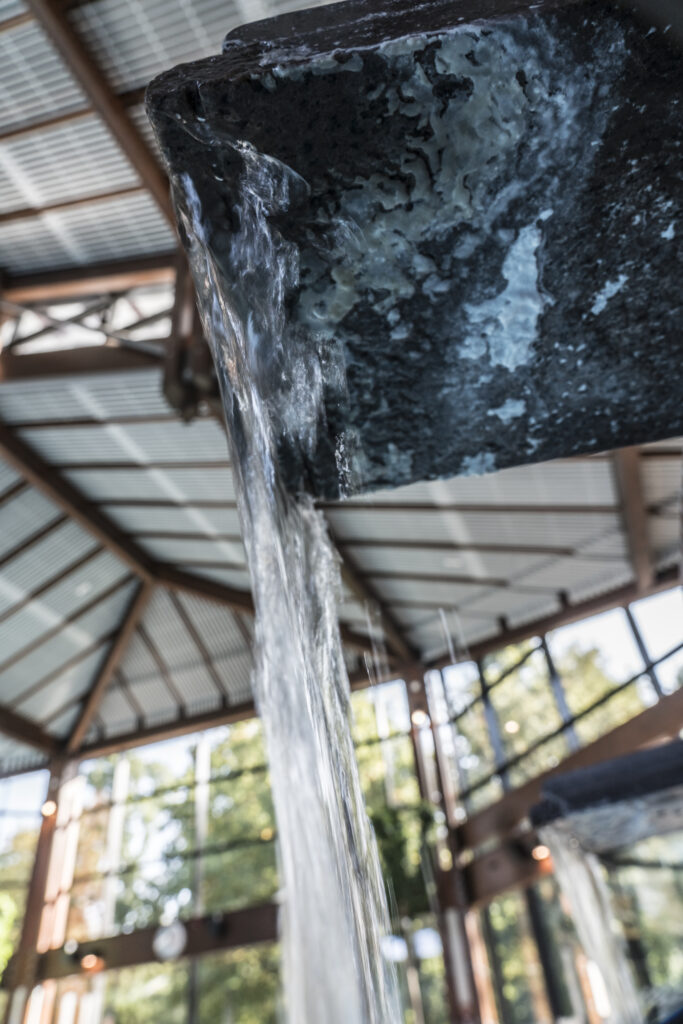
The thermal water of the Keidel Therme combines several extraordinary properties:
850 meters depth
The water of the Kurt Sauer spring comes from this depth.
45–46 °C Source temperature
This is how warm the water naturally rises to the surface.
Up to 120,000 m³ per year
The main spring supplies up to 120 million liters of thermal water annually.
128 °dH water hardness
This makes the thermal water more than ten times harder than Freiburg’s drinking water at about 8–12 °dH.
Thermal water is defined by its natural temperature. However, it gets its special quality from its geological origin and the minerals it contains individually.
The thermal water of the Keidel Therme covers a long natural path on its way from a depth of 850 meters through the rock layers. In doing so, it absorbs minerals from its geological environment. In this way, water becomes a special natural product – and a bath in warm water becomes a characteristic thermal water experience.
Pictures: Michael Spiegelhalter
You need to load content from reCAPTCHA to submit the form. Please note that doing so will share data with third-party providers.
More InformationYou are currently viewing a placeholder content from Turnstile. To access the actual content, click the button below. Please note that doing so will share data with third-party providers.
More InformationYou are currently viewing a placeholder content from Facebook. To access the actual content, click the button below. Please note that doing so will share data with third-party providers.
More InformationYou are currently viewing a placeholder content from Instagram. To access the actual content, click the button below. Please note that doing so will share data with third-party providers.
More InformationYou are currently viewing a placeholder content from OpenStreetMap. To access the actual content, click the button below. Please note that doing so will share data with third-party providers.
More InformationYou are currently viewing a placeholder content from X. To access the actual content, click the button below. Please note that doing so will share data with third-party providers.
More Information


